
The proportion of older adults living alone is steadily increasing due to demographic and social changes. Feelings of loneliness and cognitive impairments can make it considerably more difficult to manage daily life. Many older adults prefer to remain in their own homes rather than live in a nursing home—but personal support from family or friends is not always available, and home care services are often overwhelmed.
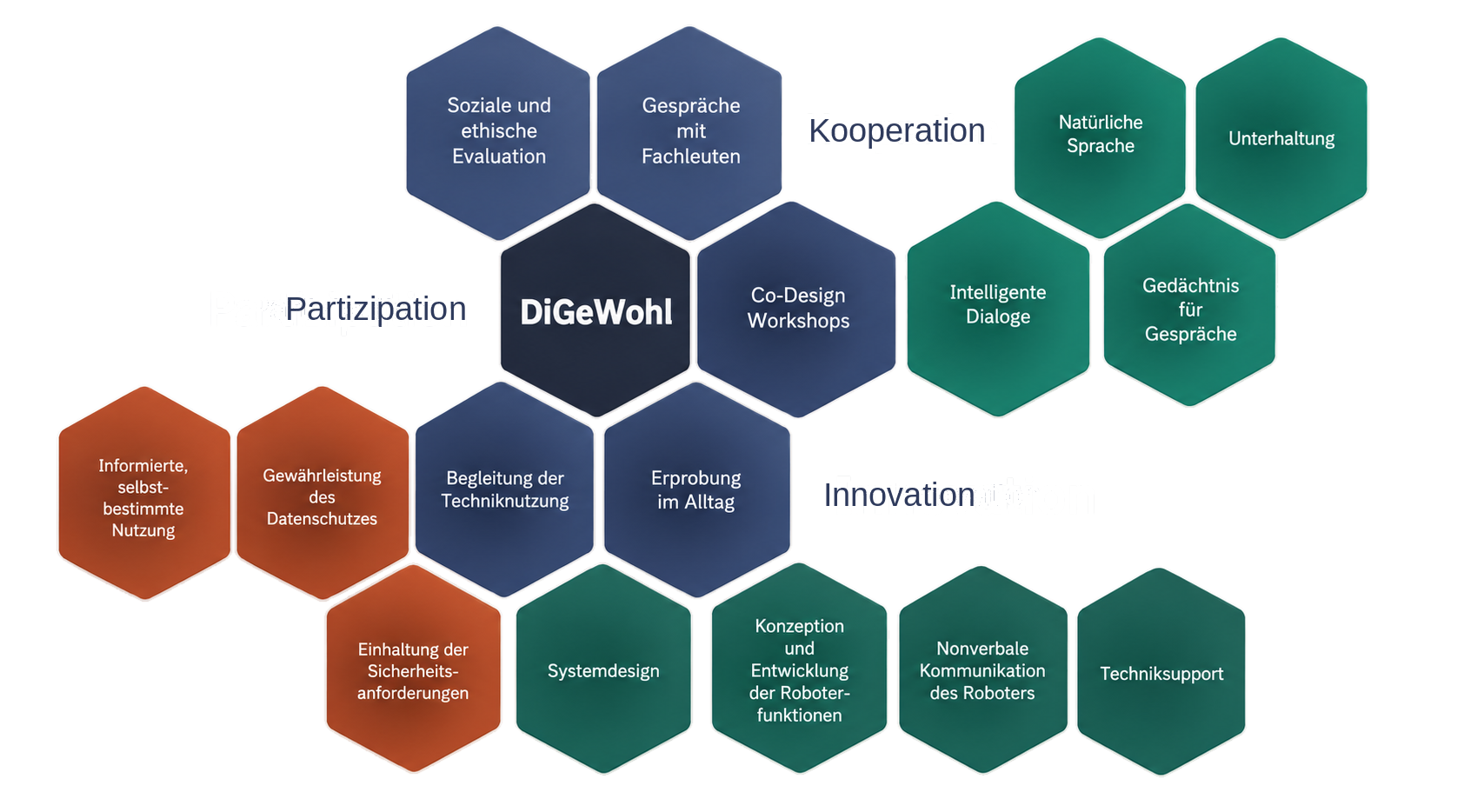
In the DiGeWohl project, we are using a participatory approach to develop a mobile companion in the form of a robot dog that allows users to communicate in natural German using large language models. The robot dog is designed to provide practical support—for example, with questions about medication schedules or scheduling appointments—while also facilitating conversations about everyday topics and topics relevant to users’ life stories.Development is taking place through an interdisciplinary and participatory process. In co-creation workshops with older adults and practice partners from the fields of housing, elder care, and senior services, we are identifying specific needs, expectations, and requirements. Data protection, ethical considerations, and aspects of user-friendliness are taken into account from the very beginning and integrated into the development process. To enable interactions that are as personalized and trusting as possible, personalized speech and memory functions are being developed and adapted to the specific needs of the target group. The mobile companion is then tested and evaluated in real-life living situations and continuously refined in collaboration with the users. In addition, support from trained volunteers is provided to assist with the introduction of the technology, alleviate reservations, and promote long-term use in everyday life.